Website design and development
SaaS Landing Page Design: A Practical Guide for Startup Founders
8 min
Posted on:
Updated on:
written by

Stan Murash
Writer
reviewed by

Yarik Nikolenko
Founder
Most SaaS founders underestimate how much a landing page shapes perception. Before anyone signs up, books a demo, or even understands your product, they judge it by one page.
The problem? Many SaaS landing pages look impressive but explain very little.
A strong SaaS landing page design isn’t about aesthetics — it’s about clarity, structure, and trust.
At Tribe, we see this constantly with early-stage AI, Web3, and SaaS founders. The product might be solid, but the landing page makes it harder to understand than it should be.
What Makes SaaS Landing Pages Different From Normal Websites
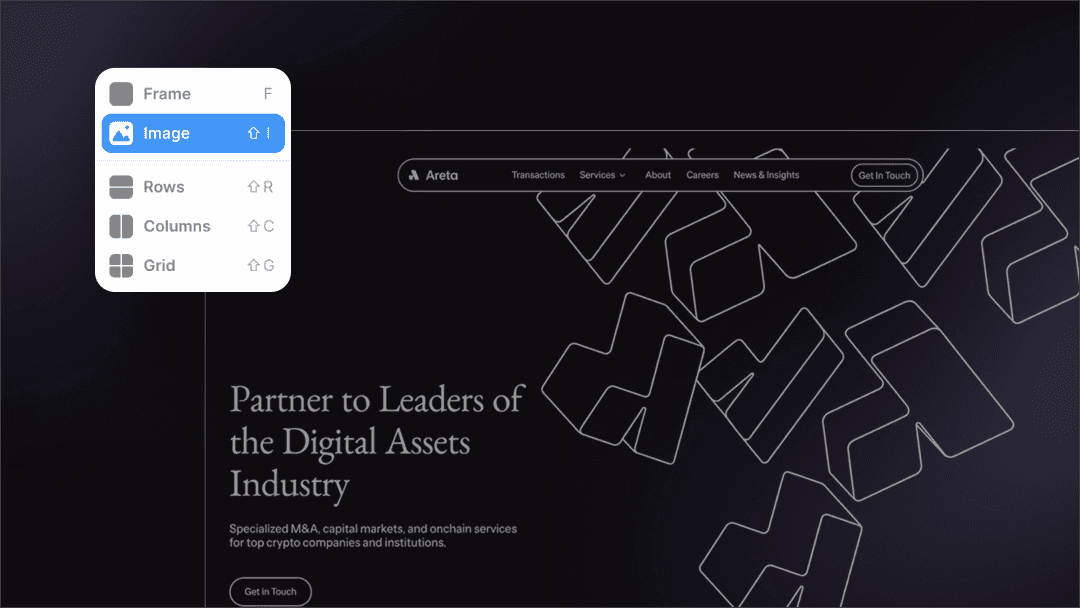
Most websites exist to inform.
SaaS landing pages exist to convert.
That difference changes everything about how they should be designed. A typical company site might spread information across many pages, while a SaaS landing page often carries the entire job of explaining the product, building trust, and triggering a conversion in a single flow.
Continuous conversion focus
A SaaS landing page isn’t just a place to “learn more.” Every section should move the visitor closer to a specific action — usually signing up, starting a trial, or booking a demo.
This means the page must guide users step by step:
Understand the product
See how it works
Believe it’s trustworthy
Take action
Good SaaS pages remove friction between each of these steps. According to UX research from the Nielsen Norman Group, users typically scan rather than read, meaning clarity and hierarchy matter far more than decorative design.
Product-led storytelling
Unlike traditional businesses, SaaS companies sell software that often requires explanation.
Visitors don’t just need a value proposition — they need to see the product.
That’s why strong SaaS landing pages quickly introduce:
product screenshots
dashboards or interface visuals
short product walkthroughs
interaction previews
Showing the product early helps visitors understand what they’re evaluating.
We break down the broader structure of startup websites in our guide to website design and development for founders, but SaaS landing pages take this one step further by putting the product front and center.
Trust and credibility signals
Buying software always involves a level of risk.
Will the product work?
Will the company still exist next year?
Is this safe for my data?
A strong SaaS landing page design answers those concerns quickly through credibility signals such as:
testimonials
recognizable customer logos
case studies
integration partners
security badges
These signals reduce hesitation and help visitors feel comfortable trying the product.
For early-stage startups, credibility design plays an even bigger role — something we discuss deeper in our guide to branding for startups.
Clarity over creativity
Founders often assume the landing page needs to be visually impressive.
In reality, the best SaaS landing pages are often the simplest.
Overly complex layouts, abstract graphics, and clever headlines can actually make it harder for visitors to understand what the product does.
The goal isn’t originality.
The goal is comprehension.
When structure, hierarchy, and messaging are clear, visitors move through the page naturally and conversions become much easier to achieve.
The Anatomy Of A High-Converting SaaS Landing Page
A good SaaS landing page doesn’t rely on clever design tricks. It follows a clear structure that helps visitors understand the product quickly and decide whether it’s worth trying.
Think of the page as a guided story. Each section answers a specific question the visitor has in mind.
When this structure is missing, landing pages become confusing — even if they look polished.
Hero section
The hero section is the most important part of any SaaS landing page design.
It needs to answer three questions immediately:
What is this product?
• Who is it for?
• What should I do next?
A strong hero typically includes:
a clear headline explaining the product
• a short supporting sentence
• a primary call to action
• a product visual or screenshot
Many SaaS founders try to be overly clever with their headlines. The result is messaging that sounds interesting but says very little.
Clarity almost always wins.
Instead of: “Reinventing the future of digital productivity”
A stronger SaaS headline would say: “Automate your customer onboarding in minutes.”
Visitors should understand the product within seconds of landing on the page.
Product explanation section
Once the visitor understands the headline, the next step is explaining what the product actually does.
This section expands on the value proposition introduced in the hero and should clarify:
the problem being solved
• the outcome the user gets
• how the product fits into their workflow
Many SaaS sites rush this explanation and jump straight to features.
That’s usually a mistake.
Visitors first need context before they can evaluate the product itself.
The goal here is to move from “interesting idea” to “this could actually help me.”
Feature breakdown
After the product concept is clear, visitors want to know how the software works.
This is where feature sections come in.
Strong SaaS landing pages present features in small, digestible blocks rather than dumping long lists of functionality.
Each feature block should include:
a short headline
• one supporting sentence
• a product screenshot or UI preview
This format helps visitors quickly scan the page — which is how most people actually read online.
In our guide to the startup design process, we talk about why clarity and information hierarchy matter more than decorative design in early-stage products.
Landing pages follow the same principle.
Social proof and credibility
At this point, visitors usually understand the product. The next question becomes:
“Can I trust this company?”
That’s where credibility sections play a critical role.
Common trust signals include:
customer testimonials
• recognizable client logos
• usage statistics
• investor or partner logos
• security or compliance badges
Even early-stage startups can benefit from credibility signals. Developer communities, pilot users, or early partners can all serve as proof that the product is legitimate.
Research from organizations like Baymard Institute consistently shows that visible trust signals reduce hesitation and improve conversion rates.
Product walkthrough or demo
Once visitors trust the product, they often want to see it in action.
This section typically includes:
product screenshots
short demo videos
interactive UI previews
workflow illustrations
The goal is to help visitors imagine themselves using the product.
SaaS landing page design works best when the product is shown rather than described.
Many strong SaaS pages place a product walkthrough directly after the feature section to reinforce how the tool works in real scenarios.
Pricing or primary call to action
After learning about the product, visitors should be presented with a clear next step.
For many SaaS products this is:
start a free trial
• create an account
• book a demo
• join a waitlist
A common mistake is overwhelming users with multiple calls to action.
Landing pages work best when there is one dominant action repeated throughout the page.
If users are forced to choose between too many options, conversions drop.
Final conversion block
The final section of a SaaS landing page acts as a closing argument.
By this point the visitor has seen:
the product
• the features
• the benefits
• the credibility signals
The final conversion block should briefly summarize the core value proposition and present one more clear CTA.
Think of it as a final nudge for visitors who are almost ready to take action.
Strong landing pages guide users naturally toward this moment — rather than forcing them to search for what to do next.
A well-structured page like this often performs far better than visually impressive pages that lack clear flow.
Common SaaS Landing Page Mistakes
Most SaaS landing pages don’t fail because of bad design.
They fail because the page structure makes the product harder to understand than it should be. Many teams try to impress visitors visually instead of helping them quickly grasp what the product does.
The result is a landing page that looks polished but converts poorly.
Overdesigned hero sections
The hero section should communicate the product immediately.
Yet many SaaS pages fill the hero with abstract graphics, vague taglines, or complex animations. These elements might look impressive, but they often delay the one thing visitors care about most — understanding the product.
A strong hero typically prioritizes:
a clear headline
• a short supporting sentence
• a visible product screenshot
• a clear call to action
Design should support comprehension, not compete with it.
Too many CTAs
Another common mistake is overwhelming visitors with choices.
Some landing pages present several competing actions such as starting a trial, booking a demo, contacting sales, or downloading resources.
When every option looks equally important, users hesitate.
High-performing SaaS landing pages usually promote one dominant action repeated throughout the page.
Feature dumping instead of storytelling
Listing dozens of features rarely helps visitors understand a product.
Most users evaluate software through outcomes, not capabilities.
Strong landing pages organize information into a simple story:
Introduce the problem
Show how the product solves it
Highlight the most important features
No credibility signals
Visitors rarely try software they don’t trust.
Without credibility signals — such as testimonials, client logos, or integration partners — users may hesitate to sign up.
FAQ
What should a SaaS landing page include?
A SaaS landing page should include a clear headline, product visuals, feature explanations, credibility signals, and a strong call to action. The goal is to help visitors quickly understand the product and decide whether to try it.
How long should a SaaS landing page be?
Most SaaS landing pages are medium to long-form. The page should be long enough to explain the product, show features, and build trust, but structured so visitors can scan it easily.
What is the best layout for SaaS landing pages?
The most common layout follows a simple sequence: hero section, product explanation, feature breakdown, social proof, product demo, and final call to action. This structure guides visitors naturally toward conversion.
Should SaaS landing pages focus on product or benefits?
The best landing pages combine both. Benefits help visitors understand why the product matters, while product visuals show how it actually works.
Key Takeaways
A SaaS landing page should explain the product within seconds — clarity beats creativity every time.
The best pages follow a predictable structure: hero → product explanation → features → trust signals → call to action.
Showing the product early helps visitors understand what they’re evaluating much faster.
Strong landing pages guide users toward one primary action, not multiple competing CTAs.
Feature sections work best when organized as short, scannable blocks with supporting visuals.
Trust signals like testimonials, integrations, and customer logos reduce hesitation and increase conversions.
Most conversion problems come from poor structure — not weak visual design.
A simple, clear landing page usually outperforms an overly complex one.
When a landing page clearly explains what the product does, shows how it works, and builds trust along the way, conversions become much easier to achieve.
Most successful SaaS companies follow surprisingly simple structures — they just execute them well.
Feel like you need some help with getting your SaaS landing page design just right? Book a fit call.