The Founder’s Guide to Branding for SaaS Startups
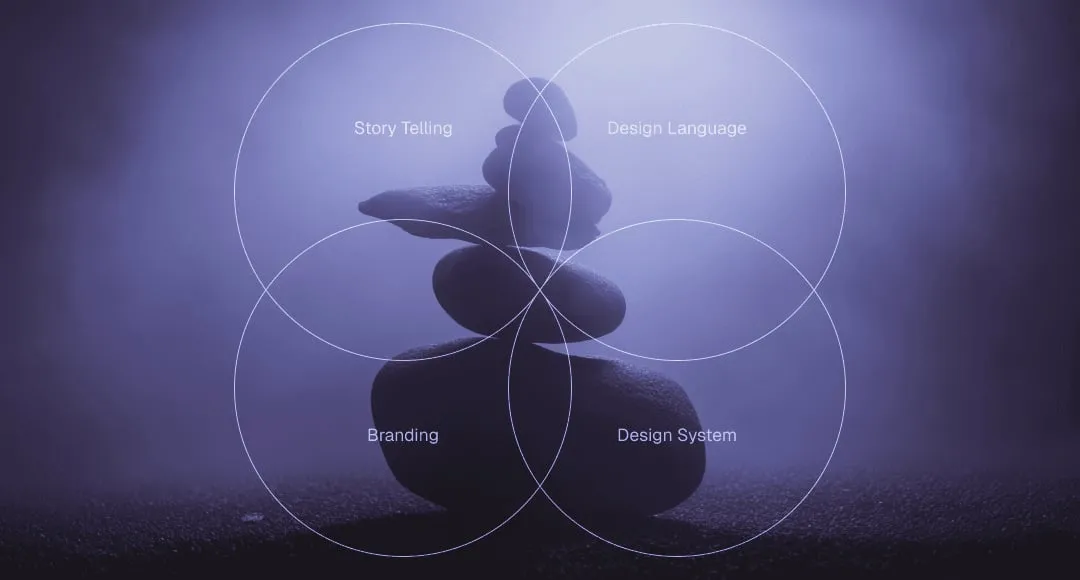
SaaS is a trust business.
Your buyers don’t fully understand your architecture. They won’t audit your code. They won’t read every feature spec. They’ll glance at your website, skim your messaging, look at your UI — and decide in seconds whether you feel safe.
Branding for SaaS startups is about signaling maturity before you’ve technically “earned” it. Especially in B2B SaaS, where contracts are large and switching costs are painful, perceived legitimacy matters almost as much as functionality.
If your brand feels early, your product feels risky.
And risky products don’t close deals.
We see this a lot at Tribe — strong SaaS products with real traction, but branding that still looks like week one of a hackathon. The product evolved. The perception didn’t.
This guide breaks down how branding for SaaS startups should actually work as a part of trust infrastructure.
Why Branding Matters More in SaaS Than You Think
SaaS is a trust business
In SaaS, you’re not selling a one-time product.
You’re asking someone to:
- Store their data with you
- Integrate you into their workflow
- Train their team around your tool
- Bet part of their revenue on your stability
That’s not a casual purchase. That’s operational commitment.
If your branding feels inconsistent, unclear, or visually immature, buyers subconsciously assume your infrastructure might be too.
Branding for SaaS startups isn’t aesthetic polish. It’s risk reduction.
Buyers evaluate risk before features
Founders love talking about features.
Buyers care about safety.
Before they ask,
“Does this integrate with our stack?”
They ask,
“Does this company look stable?”
Your typography, spacing, messaging clarity, and UI consistency all signal whether you’re a serious company or a side project.
That’s why branding and website execution can’t be separated. If your site still feels scrappy, fix that before you optimize conversions. We break this down deeper in our guide to website design and development for startups.
Investors read brand signals fast
Investors do the same thing buyers do — just faster.
They scan:
- Clarity of positioning
- Category ownership
- Product maturity
- Visual consistency
A tight brand tells them you understand your market.
A messy one suggests you’re still figuring it out.
Branding doesn’t replace traction.
But it amplifies it.
What Branding for SaaS Startups Actually Includes

Most founders think branding starts with a startup logo design.
It doesn’t.
For SaaS startups, branding is a layered system. Visual identity is just one part — and not even the most important one.
Positioning before visual identity
Before colors, before type, before UI polish — you need positioning.
- What category are you in?
- Who are you for (and who are you not for)?
- What problem do you own?
- How are you different from the five tools that look exactly like you?
If this isn’t clear, no visual system will save you.
We go much deeper into the fundamentals in our full guide to branding for startups, but here’s the short version: if your positioning is vague, your brand will feel vague.
And vague SaaS doesn’t convert.
Visual identity that signals maturity
Now we talk visuals.
SaaS branding should signal:
- Stability
- Clarity
- Structure
- Confidence
Not chaos. Not overdesign. Not “look at this cool gradient we found.”
Clean typography, tight spacing, controlled color systems, and repeatable layout logic matter more than flashy hero sections.
Your brand should look like it can scale.
Because your buyers are betting that it will.
Messaging that clarifies value fast
SaaS founders often overcomplicate messaging.
You live inside your product. Your buyers don’t.
Branding for SaaS startups includes simplifying:
- What you do
- Who it’s for
- Why it matters
- Why now
That’s what you should include in your design brief — and what you should be able to explain to any outsider.
If someone takes a look at your homepage and can’t explain your product in one sentence within 10 seconds, you don’t have a branding problem.
You have a clarity problem.
And clarity is branding.
The 5 Core Branding Layers Every SaaS Startup Needs
If you strip branding down to its functional core, SaaS companies need five layers working together.
Miss one, and the whole thing feels unstable.
Clear category positioning
If you can’t clearly state what category you’re in, you force buyers to do mental work.
That’s dangerous.
Are you:
- A workflow automation tool?
- An AI co-pilot?
- A compliance infrastructure layer?
- A vertical SaaS platform?
Strong SaaS branding anchors you to a recognizable category — then defines how you’re different inside it.
Without category clarity, your messaging floats. And floating brands don’t scale.
Sharp, scalable visual system
Your visual identity isn’t about being trendy.
It’s about being repeatable.
You need:
- A defined typography system
- A tight color structure (not 12 random accents)
- Clear spacing rules
- Reusable UI patterns
This is where branding connects directly to product.
If your landing page design looks refined but your product UI feels like a different company built it, trust drops immediately. That’s why branding and UX must evolve together — not in separate silos.
Product-aligned UX language
Branding for SaaS startups doesn’t stop at marketing.
Your microcopy, onboarding flow, tooltips, empty states — they all reinforce (or weaken) your brand.
Does your product voice sound:
- Confident?
- Helpful?
- Technical?
- Human?
Or does it feel inconsistent?
This alignment becomes especially important as you scale features. A strong brand system ensures every new screen still feels like you.
Website built for credibility
Your website is your first trust checkpoint.
It must communicate:
- What you do
- Who it’s for
- Why it matters
- Proof you can deliver
This isn’t just about layout. It’s structure, hierarchy, and narrative clarity. We go deeper into this in our website design and development guide, but the short version is simple:
If your site feels early, your company feels early.
Consistent marketing assets
Once you start outbound, fundraising, or running ads, inconsistency becomes visible fast.
Decks. One-pagers. Social posts. Case studies.
If your marketing assets look like each came from a different universe, your brand equity erodes.
Consistency compounds.
In SaaS, credibility is cumulative. Every asset either adds to it — or subtracts from it.
Common SaaS Branding Mistakes Founders Make
Most SaaS branding doesn’t fail because founders don’t care.
It fails because they optimize for the wrong things.
Designing for dribbble, not buyers
There’s a specific trap early-stage SaaS founders fall into: you open Dribbble. You see glowing dashboards, neon gradients, ultra-minimal layouts. And you think: “We need that.”
But your buyers aren’t designers.
They’re operators. Finance leads. CTOs. RevOps managers. Compliance teams. They don’t want pretty. They want clear.
Overdesigned interfaces, overly abstract visuals, and vague “future of work” messaging create friction. In B2B SaaS, friction kills momentum.
Clarity always beats clever.
Overcomplicating visual identity
Another common mistake: trying to look “big” too early.
Multiple sub-brands. Overly complex logo systems. Too many colors. Too many typefaces.
Strong SaaS branding is restrained. It scales because it’s structured — not because it’s loud.
If your team needs a 60-page brand book to design a LinkedIn post, something went wrong.
Rebranding too late
Many founders wait until:
- After a bad sales quarter
- After investor feedback
- After churn spikes
That’s backwards.
Brand perception shapes those outcomes long before the metrics dip.
If your product matured but your brand still looks like MVP v0.1, you’re sending mixed signals.
People often hate redesigns. But if you do one right, it can propel your product forward.
Treating website and brand separately
Your brand is not your logo.
Your brand lives in:
- Your homepage structure
- Your product UI
- Your onboarding flow
- Your pitch deck
When these don’t align, trust fractures.
When Should a SaaS Startup Invest in Branding?
The honest answer?
Earlier than you think. But not in the way you think.
Branding for SaaS startups isn’t about hiring an agency the week you register your domain. It’s about aligning perception with ambition at the right moments.
Pre-seed vs seed
At pre-seed, your goal is clarity.
You need:
- A clear category
- A simple visual system
- A credible landing page
- A tight pitch deck
You don’t need a massive brand overhaul. You need legitimacy.
At seed, the bar moves.
Now you’re:
- Hiring
- Selling harder
- Running outbound
- Talking to institutional investors
If your brand still feels like a side project, it will limit you.
Before fundraising
Investors scan fast.
If your brand:
- Looks inconsistent
- Feels unclear
- Doesn’t articulate positioning
They assume you’re still early — even if your traction says otherwise.
Branding doesn’t raise the round.
But it can absolutely influence how confidently you’re perceived in the room.
Before outbound motion
Outbound amplifies perception.
If you’re about to:
- Run ads
- Scale cold outreach
- Launch partnerships
Make sure what people land on feels intentional.
Otherwise, you’re pouring fuel on a weak signal.
When your product matured
This is the most common inflection point.
Your product improved. Your roadmap expanded. Your customers got bigger. But your brand didn’t evolve.
That’s when (re)branding becomes leverage.
How to Approach Branding Without Slowing Down Product
One fear founders have is this: “If we focus on branding, product velocity will slow down.”
That only happens when branding becomes theater instead of structure.
Here’s the better approach.
Direction over endless options
You don’t need five creative directions. You need one strong, opinionated path that aligns with your positioning and market.
Speed comes from constraint. The more options you generate, the slower decisions become.
Branding for SaaS startups should feel decisive — not exploratory.
Systems over aesthetics
A scalable brand system saves time long term.
Clear typography rules. Defined color usage. Reusable UI components.
Consistent layout logic.
When your team knows the rules, they ship faster.
This is why branding shouldn’t live in a PDF. It should live inside your design system, your product files, your website structure — the same places your team already works.
Ship, then refine
You don’t need perfection. You need coherence.
Launch with a strong foundation. Then evolve as traction grows. The best SaaS brands aren’t born fully formed — they mature intentionally.
Branding should accelerate execution.
Not delay it.
FAQ

What is branding for SaaS startups?
Branding for SaaS startups is the structured system that shapes how your company is perceived — including positioning, messaging, visual identity, website execution, and product UX consistency.
It’s not just a logo. It’s how clearly and confidently your company signals credibility to buyers and investors.
How much should a SaaS startup spend on branding?
It depends on stage.
Pre-seed teams usually need a lean but credible foundation — positioning clarity, a simple visual system, and a strong website.
Seed-stage startups often need deeper systemization across product, marketing, and fundraising materials.
The real cost isn’t overpaying for branding.
It’s underinvesting and looking risky in front of enterprise buyers.
When should a SaaS startup rebrand?
You should consider evolving your brand when:
- Your product matured significantly
- You’re moving upmarket
- Your ICP changed
- You’re preparing for fundraising
- Your current brand feels “MVP-level”
Rebranding isn’t about aesthetics. It’s about aligning perception with reality.
Is branding important before product-market fit?
Yes — but proportionally.
Before PMF, branding should focus on clarity and legitimacy, not perfection.
You need to look credible enough to test properly. If users don’t trust you, you won’t get honest feedback.
What’s included in SaaS branding?
At minimum:
- Category positioning
- Messaging framework
- Visual identity system
- Website structure
- Product-aligned UX language
- Consistent marketing assets
When these pieces work together, your SaaS brand becomes an asset — not decoration.
Key Takeaways
- SaaS branding is about reducing perceived risk — not adding visual flair.
- If your brand feels early, your product feels risky.
- Positioning clarity matters more than logo design.
- Your website, product UI, and marketing assets must feel like one system.
- Investors and buyers judge brand maturity in seconds.
- Strong brand systems increase speed — they don’t slow teams down.
- Rebranding isn’t cosmetic; it’s a growth alignment move.
- Consistency compounds credibility over time.
When your positioning is sharp, your visuals are structured, your website feels intentional, and your product experience aligns with your message, something subtle happens:
Buyers hesitate less. Investors ask better questions. Your team moves with more clarity.
Strong branding doesn’t replace product quality. It amplifies it.
If you feel you need some help to get your SaaS branding right, book a fit call and let’s see what we can do together.