Startup Redesign Done Wrong: What Founders Get Backwards

A startup redesign sounds like progress.
New look. Sharper UI. Updated brand. Maybe even a big “v2” moment.
But most startup redesign decisions aren’t driven by data. They’re driven by emotion.
You feel like you’ve outgrown your site. An investor makes a comment. A competitor launches something that looks cleaner.
Suddenly, redesign feels urgent.
So you hit reset.
The problem? Redesigns don’t just change visuals — they disrupt momentum.
Users have to relearn flows. Marketing has to rebuild assets. Sales decks go out of sync.
And internally, everything feels unstable for weeks (sometimes months).
That’s why people secretly hate redesigns — even when they can’t articulate why.
At Tribe, we’ve worked with redesigns and we made them work. But we’ve seen a consistent pattern: redesign fails when it becomes a creative reset instead of a strategic evolution.
So, this article isn’t about picking better colors. It’s about understanding why startup redesigns go wrong — and how to avoid becoming another “we should’ve kept the old version” story.
Why Founders Decide To Redesign

Most startup redesign decisions don’t begin with a usability audit.
They begin with discomfort.
And discomfort is a terrible product strategist.
Growth makes old design feel small
Your MVP worked. It got traction. Maybe even revenue.
But now the product has evolved. More features. Clearer ICP. Bigger ambitions.
And the old design suddenly feels… junior.
It doesn’t reflect the company you’ve become.
This is one of the most legitimate triggers for a product or website redesign. As products mature, positioning sharpens. Messaging changes. The surface layer should eventually catch up.
But here’s the nuance: evolution doesn’t automatically require reinvention.
Often, what’s needed is refinement — not a full teardown.
Investor pressure
Few things accelerate redesign like this sentence:
“We love what you’re building. The brand just needs work.”
Now the redesign isn’t optional. It’s urgent.
Founders start associating visual polish with credibility. And to be fair — credibility does matter. Especially in fintech, AI, Web3, and EdTech where trust is fragile.
But investor discomfort is usually about clarity, not aesthetics.
And clarity lives deeper than your color palette.
Product evolved but brand didn’t
This one’s real.
If your branding strategy and messaging still speaks to early adopters but you’re selling to enterprise buyers, you have a positioning gap.
If your site describes v1 but you’re shipping v3, you have a credibility gap.
That’s when redesign becomes strategic.
The key idea: redesign should reflect growth — not insecurity.
When redesign is reactive, it usually overcorrects. When it’s strategic, it clarifies.
Why People Secretly Hate Redesigns

Founders love redesigns.
Users tolerate them.
Teams survive them.
That tension alone should make you cautious.
Redesign feels like forward motion internally — but externally, it often feels like disruption.
And disruption creates friction.
Users hate relearning things
Humans are wired to prefer what they already know.
In behavioral economics, this is called status quo bias — the tendency to prefer the current state of affairs even when alternatives may be objectively better.
Your users don’t analyze your UI like designers do, they build habits.
They know where the button lives. They know which tab solves their problem. They know the sequence that gets them from A to B.
When you redesign, you break that rhythm.
Even if the new flow is technically cleaner, users experience friction because their muscle memory no longer works. What used to take seconds now requires thinking.
And thinking feels like effort. Effort feels like regression. That’s why redesigns often get backlash that sounds irrational: “I liked the old one better.”
It’s not about aesthetics. It’s about familiarity being disrupted.
Teams lose internal clarity
Redesign isn’t just external.
You have new marketing assets.
Sales decks need visual updates.
Product screenshots are outdated.
Social media design feels inconsistent with everything else.
If the rollout isn’t tightly managed, you create internal chaos. Momentum drops because alignment drops.
The “this looked better before” effect
Every redesign triggers nostalgia. Even bad designs earn loyalty over time.
Psychologists call this the “mere exposure effect” — we prefer what we’re familiar with.
So when founders redesign to look more “modern,” they underestimate emotional resistance.
Users don’t reward novelty, they reward clarity and stability.
That’s why redesigns that optimize for trends instead of trust often backfire.
The Real Reasons Startup Redesigns Fail
Redesigns rarely fail because designers lack skills. They fail because founders misdiagnose the problem.
A startup redesign is often treated like a creative reset — a chance to “level up” visually. But design is rarely the root issue. More often, it’s clarity, positioning, or product maturity that needs attention. When those underlying questions go unanswered, redesign becomes cosmetic surgery over structural cracks.
Let’s break down where things actually go wrong.
They redesign everything instead of what matters
One of the most common mistakes is going too far, too fast.
Instead of identifying friction points, teams wipe the slate clean. New startup logo design. New typography. New layout system. New messaging. New UI patterns. Everything changes at once.
The intention is understandable: if we’re redesigning, we might as well do it properly.
But “properly” doesn’t mean comprehensively. It means strategically.
When you change everything simultaneously, you lose signal. If conversion drops, you don’t know why. If engagement improves, you don’t know what caused it. The redesign becomes an uncontrolled experiment.
More importantly, you erase accumulated equity. Even imperfect design builds recognition over time. Gradual evolution protects that recognition. Total reinvention discards it.
Redesign should be surgical, not theatrical.
They ignore what’s already working
Startups often assume that because something looks outdated, it must be underperforming.
That assumption is dangerous.
If your landing page design helps to convert well, if certain messaging consistently drives demos, or if your onboarding flow retains users — those elements deserve protection. Performance data should guide redesign decisions, not aesthetic fatigue.
This is why redesign should start with an audit, not a moodboard.
Before changing anything, founders need to understand what actually drives growth.
When redesign erases working components, it creates regression disguised as improvement.
They confuse modern visuals with better UX
Another failure pattern is equating “new” with “better.”
Minimal layouts, oversized typography, subtle animations — these can elevate perception. But they don’t automatically improve usability.
Usability depends on clarity, hierarchy, and task efficiency. If users can’t quickly understand what you do, who it’s for, and how to take action, modern styling won’t compensate.
Founders sometimes chase trend alignment instead of user alignment. The product ends up looking contemporary but behaving ambiguously.
This is why understanding the underlying startup design process matters. Design decisions should emerge from user behavior and business goals, not aesthetic comparison with competitors.
Redesign fails when it optimizes for impressiveness over usefulness.
They treat redesign as branding — not positioning
A startup redesign is not just a visual refresh. It’s a strategic checkpoint.
If your target audience has shifted, your pricing changed, or your product moved upmarket, the real work is positioning clarity. Visual identity should reflect that clarity — not attempt to create it.
When founders jump into color palettes and logo updates without revisiting their narrative, they’re solving the wrong problem.
Branding is the articulation of who you are and why you matter. We explore this foundation in more depth in our guide to branding for startups. Without it, redesign becomes surface-level polish.
Positioning first. Presentation second.
They let process override momentum
Finally, redesign fails when it becomes heavy.
Long discovery phases. Endless iterations. Large reveal moments. Months of internal paralysis while “the new version” is being prepared.
Early-stage startups cannot afford design theater.
Momentum is an asset. Interrupting it has real cost — in marketing continuity, team focus, and product velocity.
A smarter approach is incremental evolution: improve critical flows first, clarify messaging, strengthen hierarchy, and refine the system over time. Redesign should integrate into growth, not pause it.
When founders treat redesign as a growth multiplier instead of a creative event, outcomes change dramatically.
Because ultimately, startup redesign isn’t about looking different.
It’s about performing better.
When A Startup Redesign Actually Makes Sense
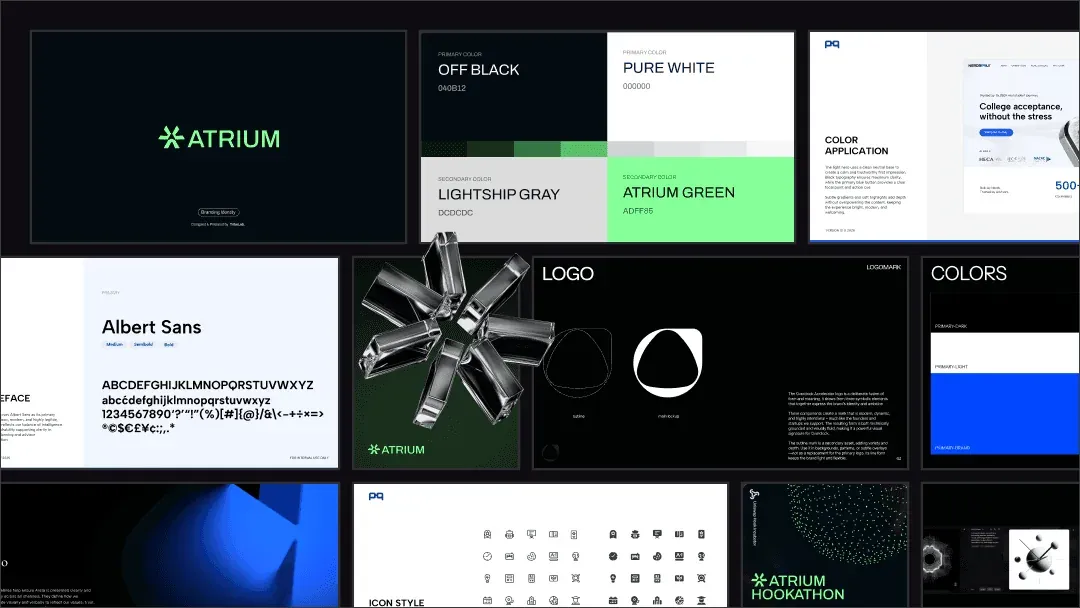
After everything we’ve covered, it might sound like redesign is a trap.
It isn’t.
It just needs to be justified.
A startup redesign makes sense when the underlying business has genuinely changed — not when the founder’s aesthetic tolerance has expired.
Here are the moments when redesign becomes strategic rather than reactive.
You’ve changed your audience
If you started selling to indie builders and are now pitching enterprise buyers, your credibility bar shifted.
Enterprise customers look for signals of stability, clarity, and maturity. What felt playful and experimental before might now feel risky. In industries like fintech, AI, Web3, or EdTech, perceived professionalism directly impacts trust.
In this case, redesign isn’t cosmetic. It’s alignment.
Your interface, messaging hierarchy, and visual tone should reflect the expectations of your current buyer — not the ones you started with.
Your product matured significantly
There’s a natural point in a startup’s life where the MVP scaffolding shows.
Early landing pages are often feature-light. Navigation is simple because the product is simple. The visual system is narrow because scope is narrow.
But when the product grows into a platform — with multiple use cases, personas, and workflows — the original structure can’t support the complexity anymore.
That’s when redesign becomes structural.
Not because it “looks old,” but because the information architecture no longer scales.
Your current design actively hurts performance
Sometimes redesign is necessary because friction is measurable.
High bounce rates. Confused onboarding. Drop-offs in critical flows. Messaging that doesn’t convert despite traffic.
This is where redesign becomes optimization.
And ideally, it connects directly to your broader marketing system. As we explain in our piece on marketing and design working together, growth assets need consistency across product, site, and outbound materials. When those are misaligned, performance suffers.
The key distinction is this:
Redesign should respond to evidence.
Not ego.
If your redesign is anchored in growth signals, audience evolution, or structural constraints, it can unlock momentum.
If it’s anchored in comparison or insecurity, it usually does the opposite.
How To Redesign Without Killing Momentum
If you’ve decided a startup redesign is necessary, the real question isn’t whether to do it.
It’s how to do it without slowing growth.
The difference between a redesign that compounds momentum and one that stalls it comes down to discipline.
Audit first, redesign second
Before touching visuals, step back and measure.
Which pages convert?
Which flows retain users?
Where do people drop off?
What messaging drives demos?
Redesign decisions should emerge from data and user behavior, not aesthetic fatigue. A structured evaluation prevents unnecessary reinvention.
When you know what works, you protect it.
When you know what doesn’t, you improve it.
That clarity alone eliminates half of redesign risk.
Preserve existing equity
Even imperfect brands build recognition over time.
If users associate your product with certain visual cues — a color, a layout rhythm, a tone — you don’t need to erase them. You can refine them.
Evolution maintains continuity. Revolution forces re-education.
Subtle adjustments in hierarchy, spacing, typography, and structure often create dramatic improvements without destabilizing familiarity.
The goal isn’t to look unrecognizable.
It’s to look sharper.
Fix flows before visuals
Founders frequently start redesign with brand updates — logos, palettes, typography systems.
But if onboarding is confusing or navigation lacks clarity, visual polish won’t solve the underlying friction.
This is where understanding a structured startup design process becomes critical. UX logic should lead; visual expression should follow.
When user flows improve, performance improves. When only aesthetics change, perception shifts temporarily — but behavior doesn’t.
Roll out in phases
The biggest mistake in redesign execution is the “big reveal.”
Massive launch day. Everything changes overnight.
Phased rollouts are almost always healthier:
- Improve homepage clarity first
- Refine high-traffic landing pages
- Optimize key user flows
- Gradually update marketing assets
This approach protects alignment across product, marketing, and sales.
Redesign should feel like steady progress, not a dramatic event.
Because in early-stage startups, stability builds trust.
And trust builds growth.
Frequently Asked Questions

What is a startup redesign?
A startup redesign is the strategic update of a product, website, or brand to reflect growth, clearer positioning, or improved user experience. Done correctly, it improves clarity and performance — not just appearance.
When should a startup redesign its website?
A redesign makes sense when your audience changes, your product matures significantly, or measurable friction (like poor conversion or retention) indicates structural issues. It should be evidence-driven, not emotionally triggered.
Why do users dislike redesigns?
Users build habits around familiar interfaces. When layouts and flows change suddenly, those habits break. Psychological tendencies like status quo bias make people prefer what they already know, even if the new version is objectively better.
How long does a startup redesign take?
For early-stage companies, a focused and strategic redesign typically takes 3–6 weeks. Timelines stretch when scope becomes unclear or when teams attempt to reinvent everything simultaneously.
Is it better to refresh or fully redesign?
In most cases, a structured refresh is smarter. Preserving recognition and improving clarity incrementally reduces risk. Full redesigns should be reserved for significant product or positioning shifts.
Key Takeaways
- A startup redesign should strengthen momentum — not interrupt it.
- Redesign everything only when everything is broken (which is rare).
- Familiarity creates trust; sudden change creates friction.
- Positioning clarity matters more than visual modernity.
- Audit performance before touching UI or brand elements.
- Improve user flows first, then refine aesthetics.
- Phased rollouts outperform dramatic “big reveal” launches.
- Evolution protects brand equity; reinvention risks losing it.
A startup redesign is not a creative milestone, it’s a growth decision.
When anchored in positioning clarity, user behavior, and measurable performance gaps, redesign can unlock credibility and conversion. When driven by comparison, impatience, or aesthetic dissatisfaction, it often resets momentum you worked hard to build.
If you’re considering a redesign and want a second perspective before changing what already works — book a fit call.
More on website design and development
 Website design and developmentFintech App Design for Startups: How to Build Trust Without Slowing the Product Down
 Website design and developmentGamification in eLearning: What Actually Works for Engagement and Retention
 Website design and developmentStartup Homepage Design: The Structure Early-Stage Founders Actually Need